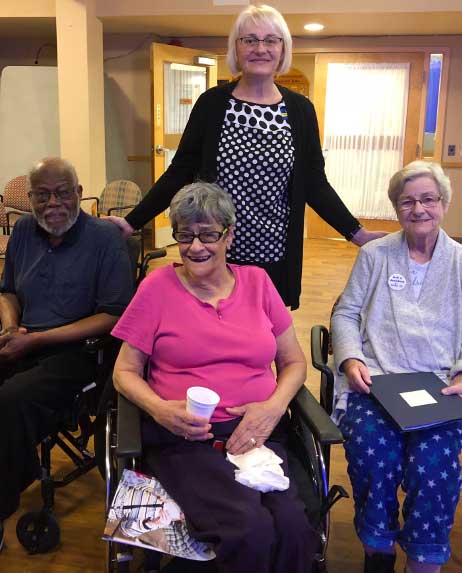
A Residents' Council is an independent, self-determining group made up of only residents of a long-term care home. The Council is intended and designed to form the collective voice of all residents who reside in the LTC home, whether or not they attend meetings. All residents have the right to participate in the Residents' Council.
The Residents' Council, perhaps with an elected Executive or Leadership Team, meets regularly to provide advice and recommendations to the licensee regarding what the residents would like to see done to improve care or the quality of life in the home, and to provide peer to peer support.
Residents' Councils also meet to exercise several powers including, but not limited to sponsoring and planning activities, collaborating with community groups, reviewing the financial documents and operations of the LTC home, and attempting to resolve disputes.
Through the Fixing Long-Term Care Act, 2021, every licensee of a long-term care home must ensure that a Residents' Council is established at the home. Every licensee of a long-term care home must also appoint a Residents' Council Assistant who is acceptable to that council to assist the Residents' Council.
Ontario Association of Residents' Councils
Mailing address:
4261 Highway 7 East
Suite # A14-360
Markham, ON L3R 9W6
Tel: 905-731-3710
Toll Free: 1-800-532-0201
Fax: 905-731-1755
E-mail: info@ontarc.com
OARC is funded
by the Ontario Ministry of
Long-Term Care

Founded in 1981 by Residents
of Long-Term Care homes in Ontario
If you wish to receive OARC email communications please click the “Subscribe” button.

OARC is funded by the Ontario Ministry of Long-Term Care, membership dues and other revenue.
The views expressed in this publication are the views of OARC and do not necessarily reflect those of our supporters or the province.